Friday, April 17, 2020

New Rochelle: Home to Baseball Hall of Famers - Mariano Rivera


Last, but not least in our series of Baseball Hall of Famers with ties to New Rochelle: Mariano Rivera!

"Raised in the Panamanian fishing village of Puerto Caimito - about 15 miles from Panama City - Mariano Rivera began his baseball journey playing with cardboard gloves and tree-branch bats," reads the description on the Baseball Hall of Fame website. A live arm and an athletic body brought him to the attention of the New York Yankees, with whom he signed as an international free agent for $3,000 on Feb. 17, 1990." It continues, "The Yankees won five World Series titles during his 19-season career, advancing to the postseason 17 times. Rivera was named the World Series MVP in 1999 and the ALCS MVP in 2003...In 19 seasons, Rivera posted a record 652 saves with a win-loss mark of 82-60. His career ERA of 2.21 ranks No. 1 among all pitchers who started their careers in the Live Ball Era (post 1919), and his 952 games finished also rank first all time."

In 1995, as a young ballplayer, Rivera became fast friends with Joe Fosina, a pillar of the New Rochelle community and the owner of the company that oversees Yankees' uniforms. Their friendship led to New Rochelle becoming the adopted home of Rivera and his wife, Clara. In 2014, Refugio de Esperanza, "Refuge of Hope," was opened in the former North Avenue Chuch, located next to New Rochelle's Police Headquarters and Courthouse. Clara Rivera is the Senior Pastor of the Pentecostal congregation. The 1901 building underwent a 3 million renovation funded by the Mariano Rivera Foundation.


Rivera was inducted into the Baseball Hall of Fame on July 21, 2019, the first year of eligibility. He was first player ever to be elected unanimously by the Baseball Writers' Association of America. New Rochelle was quick to pay tribute with a "Mariano Rivera Day" on July 27, with festivities that included a special presentation of the Key to the City, a pinstripe parade and a culminating celebration at the Hudson Park Bandshell. "New Rochelle has been my hometown since I came here in '95," Rivera said during an interview before the ceremonies began. "New Rochelle reminds me of my hometown and has been amazing." 


The Riveras have given generously to numerous causes around the world and locally. On May 28, 2015, Mariano donated his time at a book-signing event at NRPL to help the Friends of NRPL raise funds to build their bookstore. When "The Closer" announced his retirement he said, "I would love to be remembered as a player who was always there for others." Rivera has taken those sentiments far beyond the baseball stadium.


Thursday, April 16, 2020

New Rochelle: Home to Baseball Hall of Famers - Joe Torre


Born in Brooklyn in 1940, Joe Torre followed in the footsteps of his brother Frank, signing with the Atlanta Braves right out of high school. Torre became one of the best hitting backstops in the game, peaking with 36 home runs in 1966. He earned a Gold Glove Award in 1965. Torre went on to play for the St. Louis Cardinals in 1969 and the Mets in 1974. He was a catched as well as both a first and third basemen. He was named Most Valuable Player in the National League in 1971 and was a nine-time All-Star.

He made his managerial debut on May 31, 1977, when he became the first player-manager in the majors since 1959. He became the Mets full-time skipper eighteen days later. In 1982, Torre was named AP Manager of the Year for leading the Braves to a division title. After managing the Cardinals, 1990 - 1996, Yankees owner George Steinbrenner hired Torre as his team's manager. As the 31st manager in Yankees team history, he joined Casey Stengel, Yogi Berra and Dallas Green as the fourth skipper to wear both Yankee and New York Mets uniforms. Torre's Yankees made the playoffs every year under his tenure. He led the Yankees to 6 World Series appearances during the 12 year span, winning 4 World Series Championships. The 2000 title was the 26th overall for the Yankees, the most of any team in professional sports.

In 2008, Joe was hired by the Dodgers, where in 2010 he ended his career as a player and manager. From 1982 to 1984, he worked in the broadcast booth and in 2011, began his career as a baseball executive in the Commissioner's office.

The Yankees retired Joe's uniform number 6 on "Joe Torre Day," August 23, 2014, and honored him with a plaque in Monument Park at Yankee Stadium. In 2014, he was inducted into the Baseball Hall of Fame.

Joe and his wife, Ali, first moved to Westchester in March 1996, when they rented a large 1980s home at 60 Premium Point Road, located in a gated waterfront neighborhood. When asked by Westchester Magazine if it was a difficult move, Ali Torre responded, "It was a big adjustment for me, since I grew up in Cincinnati. But we moved into New Rochelle and we just befriended so many great people...We were very fortunate to meet a lot of great people through that experience." After winning the 1996 World Series, the Torres bought a home in Harrison. 

Tuesday, April 14, 2020

New Rochelle: Home to Baseball Hall of Famers - Willie Mays


Willie Mays 

Born William Howard Mays, Jr. on May 6, 1931, in Westfield, Alabama, Willie Mays was the son of a steelworker who played center field for a local professional baseball team. Mays' mother, Ann, had been a high school track star, and it was clear from a very early age that Willie had inherited his parents' athletic talents. Mays excelled in all phases of the game - hitting for average and power, fielding, throwing and base running. His career statistics include 3,283 hits and 660 home runs. He earned National League Rookie of the Year honors in 1951 and two MVP Awards. He accumulated 12 Gold Gloves, played in 24 All-Star games and participated in four World Series. His catch in the '54 Series lives on as one of baseball's most memorable moments.

The "Say Hey Kid," as he was nicknamed, moved to New Rochelle in 1960, while playing for the Giants. Mays and his family settled into a 15 room Normandy style mansion at 90 Croft Terrace, which he purcahsed for $75,000. According to a front page story in The New York Times, his Wykagyl neighbors gave Willie and his family an enthusiastic welcome. 


During his career, Willie Mays played for the Birmingham Black Barons (1948 - 1950), the New York Giants (1951 - 1957),  the San Francisco Giants (1958 - 1972) and the New York Mets (1972 - 1973). In 1979, he was inducted into the National Baseball Hall of Game, and into the New Rochelle Walk of Fame in 2014. President Barack Obama presented Mays with the Presidential Medal of Freedom in 2015.

Monday, April 13, 2020

New Rochelle: Home to Baseball Hall of Famers - Lou Gehrig


For most of his entire, exhilarating career, Lou Gehrig, the "Pride of Yankees," lived in New Rochelle. While the strapping young man grew to fame cracking homerun shots off stadium billboards and rivaling teammate Babe Ruth in crowd-delighting triumphs, his idle hours were simply spent in or near his home at 9 Meadow Lane in New Rochelle. 


Nicknamed "The Iron Horse" for his durability, Gehrig played his entire 17-year baseball career for the New York Yankees (1923 - 1939) and became their team captain in 1935. He set several major league records including the most career grand slams (23), the most home runs by a first baseman (493) and most famously his 2,130 streak of consecutive games played - a record broken by Cal Ripken, Jr. of the Baltimore Orioles in 1995. 

By 1928, Gehrig had purchased the New Rochelle home for himself and his parents. Here, "Ma" Gehrig cooked-up memorable meals of sauerbraten, fried chicken and fried eels (Lou's favorite) for her son, Babe Ruth and their Yankee teammates. On the rare summer evenings he was not on the field, Gehrig was in New Rochelle hitting balls with some lucky neighborhood kids, playing cards with the guys up at the Elks Club on Banks Street, fishing in Echo Bay. He could also be found "stretched out on the swing" of the Meadow Lane porch - at least, that is, until 1933. That was the year he married his wife, Elinor, in their New Rochelle apartment on Circuit Avenue. For the full story on their wedding, please see our September 29, 2016 blog entry. 

Gehrig's consecutive games streak came to an end in 1939, as a result of his neuromuscular disease, amyotrophic lateral sclerosis, or ALS, later known as "Lou Gehrig's Disease." "The Iron Horse" was inducted into the Hall of Fane that year. Henry Louis Gehrig died on June 4, 1941. 


Gehrig was among the initial inductees into the New Rochelle Walk of Fame in 2011. 

Friday, April 10, 2020

New Rochelle: Home to Baseball Hall of Famers - Frank Frisch


Frank Frisch
Frankie Frisch earned the nickname of "Fordham Flash" as a superstar athlete playing for Fordham University's baseball, football and track teams. Skipping the minor leagues, Frisch went directly from Fordham University to play with the New York Giants, in 1919. After playing for the Giants for 8 years, he joined the St. Louis Cardinals for 11 years. Over the course of his 19 years in the League, he attained a .316 batting. As the manager of the Cardinals, his "Gas House Gang" won the 1934 World Series. In 1935, Frisch was selected as an All-Star for the third consecutive year. He retired two years later and was inducted into the Hall of Fame in 1947. The "Fordham Flash" moved to New Rochelle in 1930 and lived in his home at 184 Fenimore Road for thirty years. In 1940, his neighbors held a "Frisch Day" at the old Polo Grounds for this celebrated baseball legend. 

Frank Frisch's Home

"He was a remarkable study on contrasts," said his obituary in the New York Times, "a hellcat in a baseball suit but a devotee of classical music and gardening at his home in New Rochelle."

Frank Frisch died March 3, 1973 from injuries sustained in an auto accident.  

Friday, March 20, 2020

Suffragists


Suffragists in New Rochelle

The League of Women Voters of New Rochelle has to cancel their Coffee & Conversation today. We're instead bringing to you a related history gem, and a glimpse of the Notable Women of New Rochelle Exhibit, presented by NRPL and the New Rochelle Council on the Arts. Today: Three Leading Suffragists.

100 years ago, this year, American women were finally given the right to vote. The ratification of the Nineteenth Amendment, which finally passed in August 1920, was a decades-long struggle. These three women, each a former New Rochelle resident, were key figures in the battle.

Lucretia Mott
1793 - 1880

Born in Nantucket, Lucretia Coffin became a teacher when only 15 years old, beginning a long mission of educating others. In her case, it would be educating people about injustices, in attempts to change the world for the better. A small and frail looking woman, she exemplified her Quaker tradition in her gentle and tolerant ways. Her strength and determination was well-served by her eloquence.


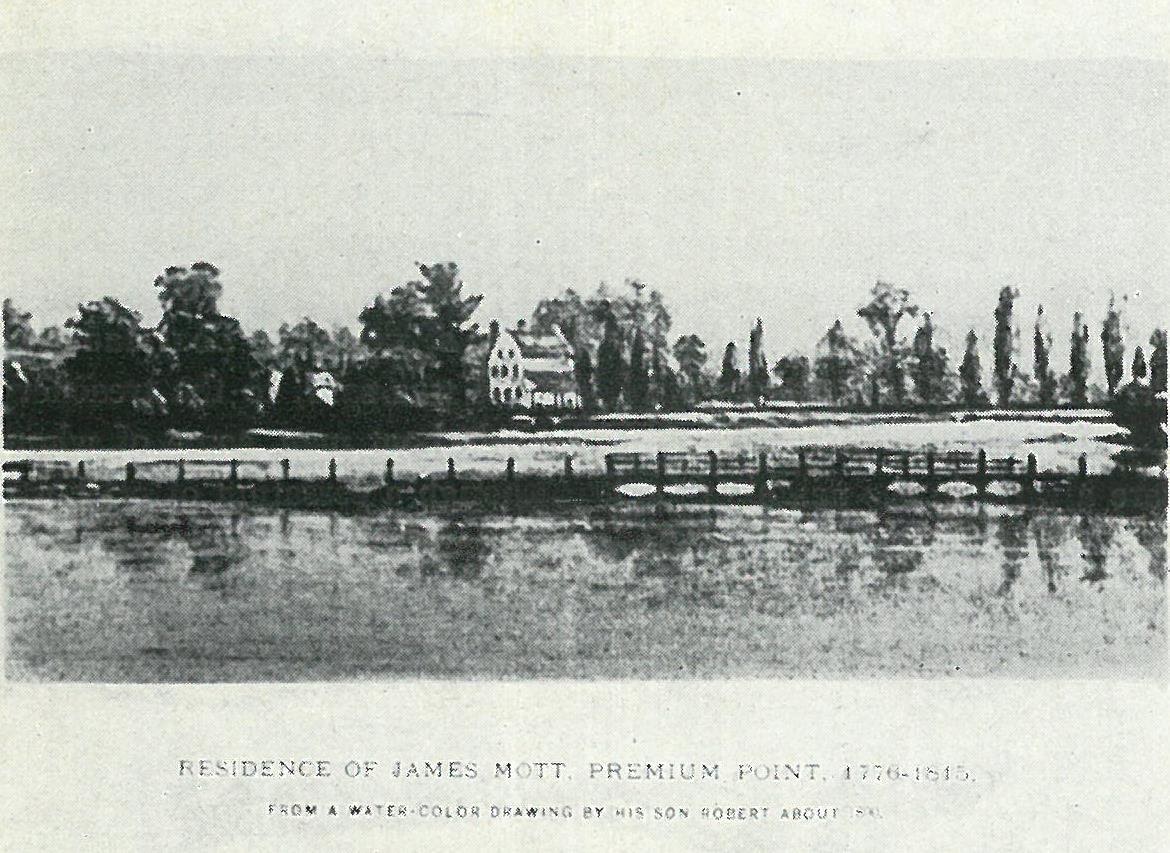
When she was 19, she married James Mott, who was raised as a Quaker as she had been. The Mott family owned Premium Mill, located on the border of New Rochelle and the Town of Mamaroneck onthe Premium Point Peninsula. In  1814. two years after Lucretia and James were married, they moved into the Mott's home, located on the New Rochelle side of the Point. Here, she would give birth to their first son, Thomas. 


By 1821, Lucretia Mott had become a Quaker minister and was highly respected for her speaking abilities. She and her husband soon joined with the more progressive wing of their faith, traveling the country with their messages. Mott was strongly opposed to slavery, and advocated not buying the products of slave labor, which prompted her husband, always her supporter, to get out of the cotton trade around 1830. 


On July 15, 1848, was the first convention of and for women, and was organized by Lucretia Mott and Elizabeth Cady Stanton in Seneca Falls, NY. 

Mott spent her life fighting for the rights of women and African Americans, while mainting a full routine of a mother and housewife. She was also a writer - among her published works are "Sermons to Medical Students" and "A Discourse for Women."

Lucretia Mott died on November 11, 1880, in Cheton Hills, PA, and was buried next to her husband, James.


Susan B. Anthony
1820 - 1906


Susan Brownwell Anthony was born into a Quaker family in Adams, Massachusetts. One of six children, she clearly carried on her parent's wishes that they all contribute positively to the world. Anthony's parents devoted themselves to the causes of abolitionism and temperance, two movements that Susan would also champion wholeheartedly. 

When she was 18, the Anthony family faced bankruptcy. To help pay the family bills, Susan took a job as an assistant teacher at Miss Eunice Kenyon's Boarding School, in New Rochelle. She wrote extensive letters describing her life in New Rochelle, including an enterprise raising silkworms and attending less-than satisfactory Quaker meetings in the area. "The people about here are anti-Abolitionist and anti-everything that's good," she penned.  

In September 1852, Anthony attended her first women's rights convention in Syracuse. She became convinced, in her words, "that the right women needed above every other...was the right of suffrage." Anthony soon became a regular on the lecture circuit and in legislative halls. By 1856, her outspokennes and tireless efforts on behalf of abolitionism led to her selection as the New York state agent for the American Anti-Slavery Society.


Susan B. Anthony and Elizabeth Cady Stanton fought to keep the word "male" out of the Fourteenth Amendment, then petitioned Congress for a constitutional amendment guaranteeing "universal suffrage" - suffrage for both the newly freed slaves and for women. Some in Congress listened; most didn't. Soon after, the two women founded the National Woman Suffrage Association and continued their work, passionately and relentlessly.


Susan B. Anthony's last public speech was in Washington on her 86th birthday, February 15, 1906. She spoke of Elizabeth Cady Stanton, Lucretia Mott, and the many other women who had battled at her side - some for over half a century - for women's suffrage. Less than a month later, on March 13, Anthony died in her home in Rochester. Ten thousand mourners attended the funeral. Ms. Anthony had requested: "When it is (my) funeral, remember that there should be no tears. Pass on, and go on with the work."

Carrie Chapman Catt
1859 - 1947

The woman who took the gavel from Susan B. Anthony and "went on" with the work and to the ratification of the 19th Amendment was Carrie Chapman Catt.

Carrie Clinton Lane was born on January 9, 1859, in Ripon, Wisconsin, the second of three children. She graduated from the Iowa Agricultural College and Model Farm in Ames (now Iowa State University) at the top of her class, having worked her way through school by washing dishes, working in the school library, and teaching. She was also the only woman in her graduating class. In 1883, she became one of the first women in the nation appointed superintindent of schools. 

Catt began work nationally for the National Woman Suffrage Association, first speaking in 1890 at its Washington, D.C. convention. In the following months, her hard work and brilliant words established her reputation as a leading suffragist. In 1900, she succeeded Susan B. Anthony as National Woman Suffrage Association president. From then on, her time was spent primarily in speechmaking, planning campaigns, organizing women, and gaining political experience. 

After a long and arduous struggle, New York granted women the right to vote on November 6, 1917. By 1918, President Woodrow Wilson was finally converted to the cause. The Nineteenth Amendment, granting women the right to votem became the law of the land. The presidential election of 1920 was the first in which women were eligible to vote nationwide. 

In 1928, Catt chose New Rochelle as her final home. Here, she continued work on her broadened interests: world peace and child labor. During these years she won countless national awards, including being named one of "America's Twelve Greatest Women Living" in 1931 by Good Housekeeping Magazine. On a more local level, she became active in the Woman's Club of New Rochelle, the Thomas Paine National Historical Association, the Women's Christian Temperance Union, and the New Rochelle Public Library.


Tuesday, March 17, 2020

Judge Martin Jerome Keogh


Judge Martin Jerome Keogh 

We thought a bit of local Irish lore would be appropriate for St. Patrick's Day, so we culled the library's local history collection to offer this history gem:

Keogh Courthouse
Remember this charming building that was formerly located just east of the Glen Island access road? This was the courthouse of Martin Jerome Keogh, one of New Rochelle's most prominent Irish-Americans. 

Born in New Ross, Co. Wexfored in Ireland on September 11, 1853, Keogh arrived in New York in 1869, nearly penniless. By 1875, he had graduated from NYU Law School, the valedictorian of his calss. He moved to New Rochelle soon after, and built a sizable career and home life. 
Judge Martin Jerome Keogh


After amassing a great deal of money from a lucrative law practive, and coutnless friends of every walk of life, Keogh became judge in the second judicial district in Westchester County on January 1, 1895. He would serve 14 years until his forced retirement, at age 70. 

With nine children, it is no wonder that Keogh had a great interest in education! He established the New Rochelle School and Kindergarten (now the Thornton-Donovan School) in 1901.

New Rochelle School and Kindergarten in 1905 (left) and Emma Keogh (right)
The Iona schools and college all have roots in a 1916 invitation Keogh made to a group of Irish Christian Brothers to start a school in New Rochelle. The Brothers first resided in "The Castle," which was located off Webster Avenue.

The Castle

In 1903, Keogh started the New Rochelle Peoples Forum, bringing "numerous distinguished speakers," including Booker T. Washington, into town. It continued for some 25 years. In 1905, he founded the Westchester County Legal Aid Society, and made the services of leading lawyers free to those too poor to pay and to new immigants applying for citizenship. 

It was around 1908 that the small Greek Revival-style building was constructed on his Pelham Road property. The little courthouse-- believe to be the only privat eon in the country -- was used when courts were closed and for Special Term cases on Saturdays. It was also used for the marriage of New Rochelle native and soprano Susan Metcalfe to cellist Pablo Casals, on April 4, 1914.

Susan Metcalfe
Pablo Casals


Judge Martin Keogh died on October 24, 1928 and was buried in Holy Sepulchre Cemetery.